Hundreds of Migrants Swim to Spain's Ceuta Enclave
Massive Migrant Crossing at Spanish Enclave Creates Humanitarian Challenge
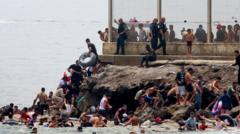
Hundreds of migrants have successfully swum across the waters separating Morocco from Ceuta, Spain's strategically located North African enclave. This significant wave of individuals attempting to reach European soil highlights the ongoing migration pressures affecting the region and raises urgent questions about border security and resource allocation along one of Europe's most contested entry points.
Overwhelming Strain on Local Infrastructure
The sudden arrival of hundreds of migrants swimming to Ceuta has placed enormous pressure on the enclave's public services and administrative systems. Local authorities report that health facilities, shelter accommodations, and processing centers are operating well beyond their intended capacity. The territorial government has emphasized that current resources were never designed to handle such concentrated influxes of arrivals within such short timeframes.
Call for National Government Action
The territory's administrative leader has publicly urged Spain's central government to take immediate and decisive action to address the escalating situation. Officials stress that this is not merely a local issue confined to Ceuta but rather a matter requiring coordinated national response and additional federal resources. The plea comes as frustration grows among residents and workers who deal directly with the consequences of inadequate infrastructure during peak arrival periods.
Geographic and Strategic Challenges
Ceuta's position as a Spanish territory on the Moroccan coast creates unique vulnerabilities to irregular migration. The relatively short distance across the water between the African coast and the enclave makes it an attractive crossing point for migrants seeking entry into the European Union. The terrain and coastal geography have historically made this route both dangerous and frequently attempted, despite known risks associated with maritime crossings.
Resource Allocation and Planning
Current resource constraints suggest that emergency funding and personnel redistributions may be necessary to maintain adequate humanitarian standards. Housing facilities are struggling to provide appropriate accommodation, while food services and medical care are stretched thin. Educational facilities and social services also face unexpected demands as migrant populations require comprehensive support systems beyond basic reception services.
International Dimension of Migration Flows
This incident reflects broader migration patterns affecting the Mediterranean region and European borders. Morocco, as the primary point of departure, sits at a crossroads for individuals fleeing economic hardship, conflict, and instability across West African nations. The Spanish enclave's proximity and relative accessibility make it a logical destination, despite the inherent dangers of maritime routes and the uncertainty of reception upon arrival.
Government Response and Policy Implications
The central Spanish government faces mounting pressure to implement comprehensive border management strategies that balance humanitarian obligations with security concerns. Officials must consider long-term solutions addressing root causes of migration while simultaneously managing immediate humanitarian needs. Potential responses include enhanced coordination with Moroccan authorities, improved processing systems, and expanded reception facilities designed to handle variable arrival rates.
Humanitarian Considerations and Challenges
Beyond administrative concerns, the welfare of migrants who swim to reach Ceuta requires careful attention. Medical screening for those exposed to potentially contaminated waters, psychological support for trauma-affected individuals, and age-appropriate care for unaccompanied minors all represent critical components of a comprehensive response. NGOs and humanitarian organizations already active in the region emphasize that solutions must prioritize human dignity while maintaining order and security.
European Union Perspective
The situation at Ceuta carries implications for broader European Union migration policy discussions. Other member states monitor developments closely, as migration patterns in one region can influence flows and policies across continental borders. The EU's approach to shared responsibility, burden-sharing mechanisms, and coordinated border management continues to evolve in response to incidents like those occurring at Spanish enclaves.
Long-Term Solutions and Strategic Planning
Addressing the root causes of irregular migration requires sustained international cooperation, economic development initiatives in source countries, and comprehensive security frameworks. Experts suggest that lasting solutions depend on multifaceted approaches combining border technology, personnel training, diplomatic engagement with neighboring nations, and addressing underlying factors driving migration.
The hundreds of migrants swimming to Ceuta represent not merely a border crossing event but a complex humanitarian and policy challenge requiring thoughtful, coordinated response from governmental agencies at all levels, international partners, and humanitarian organizations committed to protecting vulnerable populations while maintaining order and security along Europe's external borders.