Infantino Under Pressure: UEFA's World Cup Boycott Threat Explained
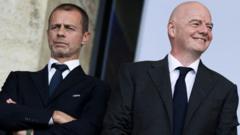
Infantino Under Pressure: UEFA's World Cup Boycott Threat Explained
The football world faces unprecedented turmoil following a dramatic 48-hour period that has shaken the sport's governing bodies to their core. At the center of this controversy stands Infantino World Cup tensions, as UEFA has issued a stark warning about potentially boycotting the tournament, while Concacaf has outright rejected the funding proposals put forward by FIFA President Gianni Infantino. This confluence of events raises critical questions about the future of international football's highest-profile competition and the viability of Infantino's continued leadership.
The Catalyst: Infantino's Rejected Funding Plan
The current crisis stems from a comprehensive funding initiative proposed by FIFA's president that was designed to support member confederations. However, Concacaf's decisive rejection of this proposal has triggered a domino effect across the sport's regulatory landscape. The North and Central American confederation's refusal to endorse Infantino's financial framework represents a significant challenge to his authority and vision for FIFA's future operations.
UEFA, representing the European football confederation, viewed the rejected plan as symptomatic of deeper systemic problems within FIFA's governance structure. Rather than silently accepting the developments, UEFA officials escalated their concerns by threatening unprecedented action—a potential World Cup boycott that would fundamentally alter the tournament's composition and credibility on the global stage.
UEFA's Boycott Threat: A Line in the Sand
UEFA's threat to boycott the World Cup represents an extraordinary escalation in the ongoing power struggle within international football administration. Such action would remove the continent's strongest footballing nations from the sport's most prestigious tournament, an outcome that would damage FIFA's commercial interests and the event's competitive integrity. This dramatic posture reflects the depths of European football's dissatisfaction with current FIFA leadership and governance practices.
The European confederation's willingness to consider such a drastic measure indicates fundamental disagreements about financial distribution, decision-making authority, and strategic direction within FIFA. By publicly contemplating a World Cup boycott, UEFA has signaled that existing governance structures no longer serve member interests adequately and that transformative change is necessary.
What Happens Now: The Path Forward
The immediate future of international football governance remains uncertain as stakeholders navigate this critical juncture. Several potential scenarios could unfold in the coming weeks and months as tensions continue to simmer between major confederations and FIFA's administrative center.
First, negotiations between UEFA, Concacaf, and FIFA leadership must intensify to address the substantive grievances driving this conflict. These discussions will likely focus on financial distributions, governance reform, and the decision-making processes that have created such profound dissatisfaction among member confederations.
Second, other continental confederations may feel compelled to take positions on the unfolding situation, potentially fracturing the unified front traditionally presented by FIFA member organizations. CAF (African confederation), AFC (Asian confederation), and CONMEBOL (South American confederation) will face pressure to align with either UEFA's aggressive stance or FIFA's preferred approach.
Can Infantino Survive This Crisis?
The central question emerging from this turbulent period concerns Gianni Infantino's political survival as FIFA president. Facing coordinated opposition from major confederations, particularly the powerful European bloc, his position appears increasingly precarious. While Infantino has survived previous controversies and challenges to his authority, the current convergence of institutional resistance presents unprecedented difficulties.
Infantino's viability as FIFA leader depends on several critical factors. His ability to negotiate meaningful compromises on the rejected funding plan will prove essential. Additionally, his capacity to demonstrate reforms in FIFA governance that address European and North American concerns about institutional transparency and decision-making will significantly influence his political future.
The FIFA president must also consider whether maintaining his current approach or pivoting toward substantial concessions offers the better path forward. Remaining intransigent could accelerate confederation defections, while excessive compromise might undermine his authority with other member organizations that depend on his leadership for stability and direction.
Broader Implications for International Football
This crisis transcends individual personalities or institutional rivalries; it reflects fundamental questions about how international football should be governed in an era of evolving global politics and commercial interests. The standoff between UEFA and FIFA administration suggests deeper structural problems within international football's governance framework.
The potential for World Cup boycotts, confederation divisions, and leadership challenges all threaten to undermine the legitimacy and coherence of international football administration. Resolving these tensions constructively will require genuine commitment to institutional reform and meaningful engagement with confederation concerns rather than attempts to impose top-down solutions.
The coming weeks will prove decisive for determining whether football's governing bodies can rebuild consensus and restore confidence in FIFA's leadership, or whether this crisis represents the beginning of more fundamental transformations in how international football is organized and administered.


