Supreme Court to Review Palestine Action Ban Decision
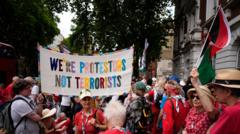
Supreme Court Grant Permission for Palestine Action Appeal
The Supreme Court of the United Kingdom has decided to hear an appeal challenging the government's proscription of Palestine Action under anti-terrorism legislation. This significant development marks a pivotal moment in the legal battle surrounding the activist organization's designation, with the court granting permission to the group's co-founder to proceed with challenging the ban imposed by authorities.
Understanding the Palestine Action Ban
Palestine Action, a protest group focused on Palestinian rights advocacy, was designated as a proscribed organization under terrorism-related legal frameworks. The proscription order effectively banned the group from operating openly in the United Kingdom, restricting its ability to conduct publicly announced activities and fundraising efforts. This classification placed Palestine Action among organizations subject to stringent legal limitations typically reserved for groups deemed security threats.
The Appeal Process Begins
The decision by the UK's highest court represents a critical juncture for Palestine Action's legal standing. By granting permission to appeal, the Supreme Court has acknowledged that substantial questions regarding the proscription warrant judicial review at the nation's apex court level. The co-founder's appeal will challenge the constitutional and legal basis for the government's decision to classify Palestine Action as a terrorist-related organization.
Legal Arguments Under Review
The forthcoming Supreme Court proceedings will likely examine whether the proscription order was appropriately justified and whether it complies with human rights protections guaranteed under UK and international law. Legal experts suggest the case could establish important precedents regarding the balance between national security measures and freedom of association and peaceful protest in democratic societies.
Implications for Activism and Civil Liberties
This development carries broader significance beyond Palestine Action itself. The Supreme Court's willingness to review the Palestine Action ban raises questions about how anti-terrorism legislation is applied to protest groups and activist organizations. Civil liberties advocates argue that such designations can potentially restrict legitimate political expression and peaceful advocacy activities.
The outcome of this appeal could influence how future protest movements and advocacy organizations operate within the United Kingdom's legal framework. If the Supreme Court rules in favor of Palestine Action, it may necessitate reassessment of how the government applies terrorism-related proscription orders to groups primarily engaged in political activism.
Government's Position on the Proscription
The government maintains that the designation of Palestine Action was justified based on specific criteria and evidence related to its activities. Officials argue that the proscription order represents an appropriate response to activities deemed incompatible with public safety and security. The forthcoming Supreme Court proceedings will provide an opportunity for the government to present its justifications before the nation's highest judicial authority.
Timeline and Next Steps
While the Supreme Court has granted permission for the appeal, the exact scheduling of hearings remains to be determined. The judicial process typically involves written submissions from both the appellant and respondent parties, followed by oral arguments before the court. This timeline allows both Palestine Action's representatives and government officials to present comprehensive legal arguments.
Broader Context of UK Anti-Terrorism Law
The United Kingdom's anti-terrorism legislation has undergone various amendments and updates throughout recent decades. These laws aim to balance national security concerns with the protection of fundamental rights including freedom of expression and association. The Supreme Court's review of the Palestine Action ban will contribute to ongoing jurisprudence surrounding the application and interpretation of these critical legal provisions.
The case represents an important moment for examining whether current anti-terrorism frameworks adequately protect democratic freedoms while addressing legitimate security concerns. Legal scholars and civil rights organizations will likely monitor the proceedings closely, as the outcome may influence how such designations are contested and reviewed in future cases involving protest organizations and activist groups.